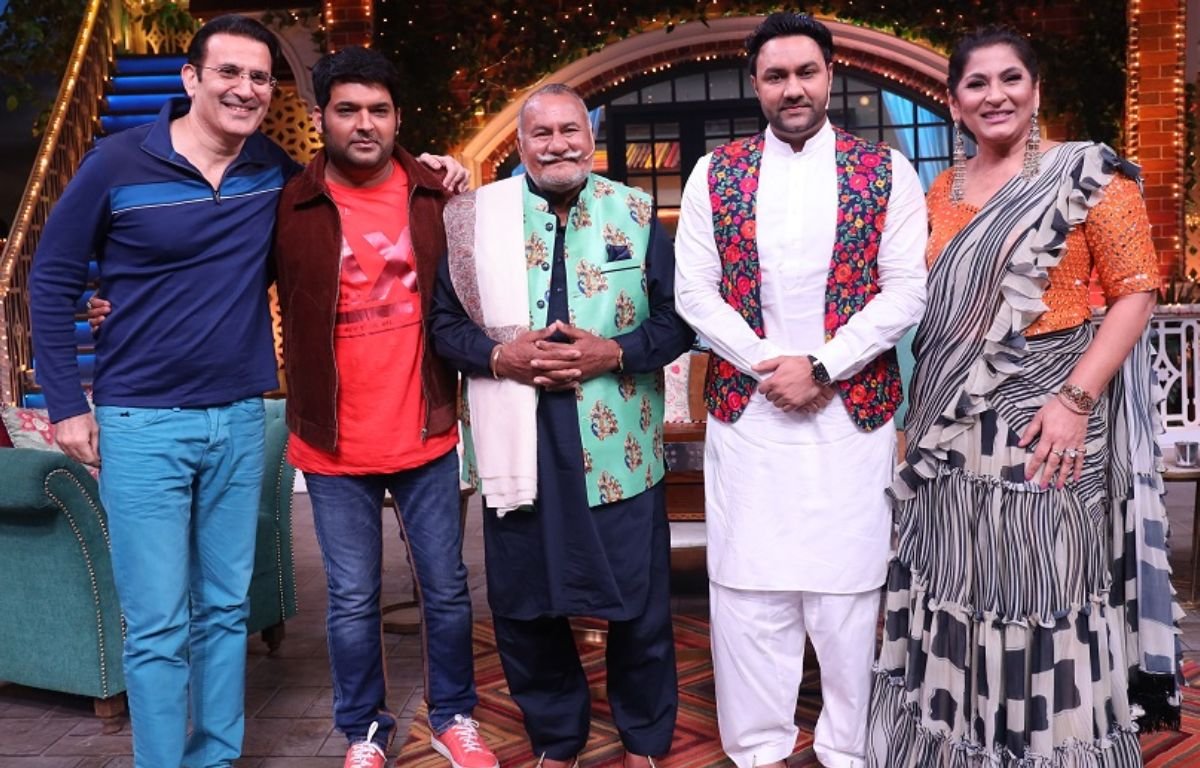
The Legendary Wadali Brothers represent an enduring legacy in Indian music—globally revered as masters of Sufi vocals, folk traditions, devotional ghazals, and profound spiritual expression. Rooted in the sacred heritage of Guru Ki Wadali, a village near Amritsar in Punjab, India, the Wadalis have embodied centuries-old musical traditions, passing them forward with devotion, authenticity, and soul-stirring artistry.
Their music transcends cultural and linguistic boundaries, celebrated by audiences worldwide for its sincerity, depth, and sublime expression of the human and divine experience.
The story of the Wadali Brothers begins with the fifth generation of a family devoted to music and spirituality. Born into a lineage of musicians committed to singing the messages of Sufi saints, Ustad Puranchand Wadali and his younger brother Ustad Pyarelal Wadali became emblematic of Punjabi Sufi singing. Their father, Thakur Das Wadali, recognized musical potential in his sons and mentored them in classical forms, while Puranchand trained under masters such as Ustad Bade Ghulam Ali Khan and Pandit Durga Das of the Patiala gharana—one of India’s most revered musical schools.
Despite having no formal academic education, the brothers cultivated extraordinary mastery in musical traditions through rigorous practice, devotion, and immersion in art. Their rise to prominence began humbly—with performances at local temples and cultural gatherings, eventually drawing the attention of broader audiences and music institutions.
Central to the Wadalis’ ethos is the belief that music is a conduit of divine expression—not a commercial enterprise. They have always emphasized spiritual depth, vocal purity, and emotional resonance over technical artifice, often performing with minimal instrumental accompaniment and focusing intensely on aalap and taan—classical elements that highlight vocal improvisation and emotive musical phrasing.
Their repertoire spans:
Gurbani – Devotional verses rooted in Sikh scriptures
Kafi – Mystical Punjabi poetry
Ghazan – Poetic forms of deep emotional nuance
Bhajan – Devotional hymns and songs
Folk Sufi Qalam – Musical renditions of saintly poetry
The Wadalis interpret the works of illustrious poets and mystics such as Baba Farid Sahib, Baba Bulleh Shah, Shah Hussain, and Amir Khusrau—bringing profound spiritual literature to life through voice and music.
Once denied a platform at the prestigious Harballabh Sangeet Sammelan in Jalandhar, the brothers turned disappointment into destiny when an All India Radio executive recorded their performance at the temple—marking their first major breakthrough.
While their style remained deeply traditional and reflective of Sufi values, a series of live performances and recordings established them as beloved voices across India and abroad.
Although primarily rooted in classical and devotional traditions, the Wadali Brothers made notable inroads into Indian cinema, bringing their unique vocal interpretation to several acclaimed films:
Pinjar – Sufi renditions penned by Gulzar
Tanu Weds Manu – ‘Aye Rangrez Mere’
Mausam – ‘Ik Tu Hi Tu Hi’
These recordings introduced Sufi sensibilities to mainstream audiences, blending spiritual expression with contemporary cinematic soundscapes.
Today, the musical legacy of the Wadali Brothers continues through Lakhwinder Wadali, son of Ustad Puranchand Wadali, who has emerged as a leading exponent of Punjabi Sufi music in his generation. Born in Guru Ki Wadali on 20 April 1978, Lakhwinder was trained rigorously from a young age by his father and uncle, mastering classical techniques alongside contemporary musical expression.
Lakhwinder’s artistry blends:
Classical tradition of the Patiala gharana
Contemporary musical sensibilities
Rich repertoire of Sufi qalam and Punjabi folk music
He has performed with renowned artists such as Himesh Reshammiya, Rahat Fateh Ali Khan, Shanker Mahadevan, Shreya Ghoshal, and Mohit Chauhan, further expanding the global footprint of the Wadali musical tradition.
In landmark performances, Lakhwinder has represented Indian music on prestigious stages—becoming the first Punjabi artist to perform in the historic courtyard of the Red Fort and delivering a landmark concert at the Taj Mahal courtyard, an achievement marking him as a cultural ambassador of Indian heritage.
His live concerts, sufi mehfils, and cultural festivals across India and internationally have cemented his reputation as a dynamic successor to the Wadali legacy.
The Wadali tradition embodies:
Masterful vocal techniques rooted in classical training
Spiritual musical interpretations that transcend language barriers
Minimalistic accompaniment—allowing voice and emotion to lead
Deep immersion in poetry and mysticism
Live performances that prioritize emotional connection over technical spectacle
Their approach reflects decades of training under eminent teachers and their own lived experience in music—imbued with humility, devotion, and cultural depth.
While originating in Punjab, the impact of the Wadalis has been truly global. Their music has resonated with audiences in:
Canada
United Kingdom
United States
Middle East
Singapore
Europe
Their performances have drawn acclaim on international festival stages, cultural institutions, and Sufi music forums—bridging cultures and uniting listeners through emotive, soulful expression.
Heritage & Legacy – Fifth-generation musicians preserving Sufi tradition.
Global Recognition – Respected on international stages.
Cinematic Contributions – Sufi songs in mainstream films.
Authentic Musical Philosophy – Emphasis on spiritual expression over commercialism.
Continued Tradition Through Lakhwinder Wadali – Extending legacy with contemporary flair.

/ Per Listing
Lorem ipsum dolor sit amet, lorem sit.
/ Per Listing
Lorem ipsum dolor sit amet, lorem sit.
/ Per Listing
Lorem ipsum dolor sit amet, lorem sit.
Claim request is processed after verification..